

Centrifuge tubes are essential consumables in modern laboratories. Based on material, they are mainly classified as plastic centrifuge tubes and glass centrifuge tubes, with a few applications using steel tubes. Different materials have significant differences in performance, suitable applications, and handling requirements. This article, presented by Labant, provides a professional comparison of plastic and glass centrifuge tubes to help laboratory personnel choose the most appropriate consumables.

1. Material and Resistance Performance
Glass Centrifuge Tubes
Glass centrifuge tubes are generally made from standard glass or borosilicate glass. The glass composition may vary slightly between manufacturers, resulting in differences in centrifugation strength.
Relative Centrifugal Force (RCF): Standard glass tubes typically withstand <3000 × g, while borosilicate glass tubes can tolerate over 10000 × g.
Temperature Resistance: Glass tubes withstand high temperatures and thermal shock, up to 200°C, but are prone to breakage under sudden temperature changes.
Chemical Stability: Glass exhibits excellent chemical resistance and is compatible with acids, bases, and organic solvents.
Limitations: Fragile, relatively expensive, and limited use in high-speed centrifugation; careful handling is required.
Plastic Centrifuge Tubes
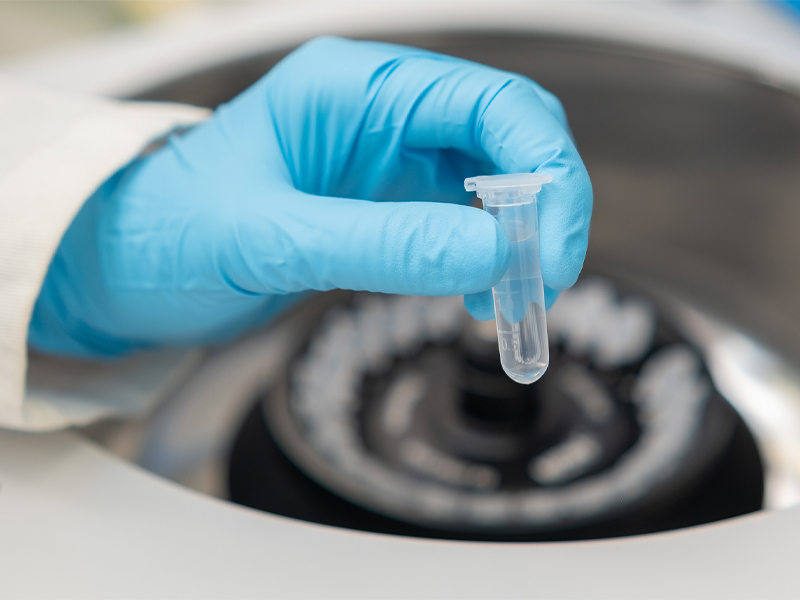
Plastic centrifuge tubes are commonly made from biological-grade polypropylene (PP), with some made from polyethylene (PE) or polyvinyl chloride (PVC).
Relative Centrifugal Force (RCF): High-quality plastic tubes can withstand up to 12000 × g, meeting most laboratory centrifugation needs.
Temperature Resistance: Suitable for -80°C to 121°C, allowing high-temperature autoclaving and ultra-low temperature storage.
Chemical Stability: Resistant to most laboratory chemicals but less tolerant to strong organic solvents compared to glass.
Advantages: Durable, shatter-resistant, low cost, and available in various sizes due to mature manufacturing processes.

2. Convenience and Reusability
Glass Centrifuge Tubes: Easy to clean and reusable, ideal for experiments requiring high chemical stability.
Plastic Centrifuge Tubes: Primarily single-use to avoid cross-contamination, but highly durable and convenient for high-speed or large-scale operations.
3. Transparency and Observation
Glass Centrifuge Tubes: High transparency allows clear observation of sample state and sedimentation, suitable for experiments requiring precise monitoring.
Plastic Centrifuge Tubes: PP tubes are slightly less transparent than glass but still allow adequate observation; transparency can be improved with colored or clear tubes.
4. Specifications and Applications
Labant provides a wide range of centrifuge tube sizes to meet different laboratory requirements:
Plastic Centrifuge Tubes: 0.2 mL PCR tubes, 0.5 mL, 1.5 mL, 2 mL, 5 mL, 10 mL, 15 mL, 50 mL, and 250 mL bottles.
Glass Centrifuge Tubes: Mostly medium to large sizes; microcentrifuge tubes are rare. Suitable for chemical reagents, high-temperature processing, and experiments requiring high chemical resistance.
Summary:
Glass Tubes: High-temperature resistance, excellent chemical stability, high transparency, but fragile, expensive, and unsuitable for high-speed or large-volume operations.
Plastic Tubes: High-speed centrifugation capable, durable, cost-effective, convenient to use, but slightly lower transparency and less resistant to strong acids, bases, or some organic solvents.
Each material has its advantages. Laboratory personnel should choose centrifuge tubes based on specific experimental needs. Labant is committed to providing high-quality, reliable centrifuge tubes that meet modern laboratories' demands for safety, durability, and ease of use.

Follow on WeChat
Copyright @ 2024 Shanghai Welso Technology Co.,Ltd.